





The choice of collaboration model should be guided by the brand’s strategy
The choice between white label and private label affects the speed of market entry, the way capital is allocated, the source of competitive advantage, and the level of risk.
White label is a good fit for brands that want to launch a product quickly, test a new category, or expand their portfolio. Private label may be a better option when a custom formulation is intended to become an important part of the brand’s competitive advantage.
At Canexpol Group, we view this choice as a business decision that should reflect the product’s objectives, the brand’s stage of development, and the resources available.
Two models with different levels of involvement
In the white label model, the brand selects an existing formulation. Since the formula has already been developed, the project can move directly to decisions concerning packaging, product variants, labelling, and production.
In the private label model, the brand defines the product requirements, while the manufacturer develops a solution tailored to the project. This process requires additional development work, testing, time, and budget. The difference therefore concerns the entire way the project is managed, not just the formulation itself.
White label reduces product development costs but offers less differentiation at the formula level. Private label may provide greater control, but exclusivity applies only when it has been clearly defined in the agreement between the parties.
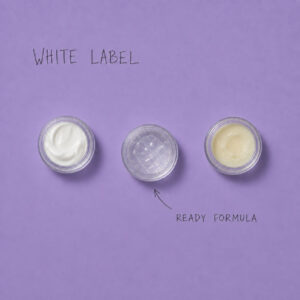
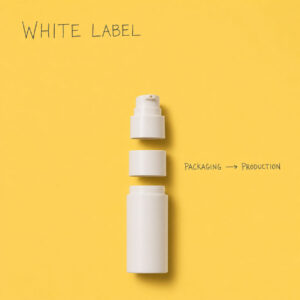
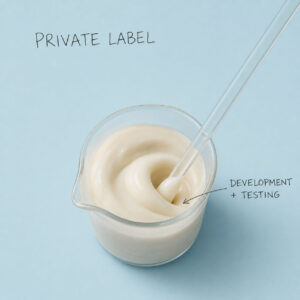

White label speeds up the launch, but it does not build the brand for you
The main advantage of white label is speed. The brand does not have to go through the complete formulation development process and can instead focus on packaging, visual identity, product variants, and launch preparation.
However, the same ready-made formula may also be available to other brands. A white label product can still stand out, but its competitive advantage will primarily come from:
- packaging and product format,
- the selection of variants,
- communication and messaging,
- the target audience,
- the way the overall product range is structured.
The more standardised the product base, the more precise the decisions concerning positioning and sales need to be. A ready-made formulation shortens the development process, but it does not replace the work involved in building a brand.
Private label makes sense when exclusivity creates real value
A custom formulation can be valuable when the product is intended to differentiate the brand from its competitors and support its market positioning.
However, a bespoke formula does not automatically guarantee a competitive advantage. Its value depends on whether the difference is meaningful to the customer and whether it fits the brand’s overall concept.
If the brand’s advantage is expected to come mainly from branding, aesthetics, product presentation, or access to a specific customer group, full formulation development may not be the first priority. It will increase costs and extend the project timeline, but it may not necessarily result in a stronger offer.
Private label is justified when the brand can clearly define:
- what is missing from existing solutions,
- how the product should be different,
- why this difference will matter to the customer.
A strong brief begins with a specific problem that the product is intended to solve.





White label and private label can represent different stages of growth
The two models do not have to be mutually exclusive. A ready-made formula can help a brand enter a new category, test demand, and gradually expand its portfolio. If the product becomes strategically important, the brand can later move towards developing a custom formulation.
This phased approach helps reduce risk. A brand does not have to develop every product from scratch at the beginning, nor does it have to rely on ready-made formulas throughout the entire product life cycle.
Different products within the same portfolio can serve different purposes. Some may quickly expand the range, while others build the brand’s core product advantage. There is no reason why every project should follow the same model.
A ready-made formula does not mean a ready-made business
A developed and tested formulation simplifies the technical stage, but it does not complete the entire project. The brand still needs to decide on packaging, product variants, order quantities, and launch organisation. It must also take into account the regulatory requirements associated with placing the product on a specific market.
White label can shorten the route to production, but it does not replace proper operational preparation. Private label can provide greater control over the product, but it will not create a competitive advantage unless the custom formulation is supported by a clear market concept.
Before choosing a model, the brand should determine where it wants to build its competitive advantage, which risks it wants to reduce, and how many resources it can commit before making the first sale.
Schedule a call
Book a short 15-minute call to discuss your project, timelines, and the next steps toward production. No obligation.

Joanna Maciejuk
Senior Key Account Manager