


Cosmetics manufacturing for brands begins long before the first production batch is launched. A brand needs to bring together the product concept, formulation, packaging, quality requirements and sales strategy into a single process that is both practical and repeatable.
The product idea may be strong, the brand identity may already be in place and the market launch plan may be ambitious. However, if the formulation cannot be manufactured consistently, the packaging is not available within the required timeframe or regulatory documentation has not been considered from the outset, adjustments will be necessary. Each adjustment affects the timeline, budget and sequence of activities.
For a brand, this means that decisions made before production begins have a direct impact on the speed of the launch, the level of risk and the ability to deliver on the original business objectives.
A brand should start with a brief, not a finished product vision
A good brief does not need to answer every possible question. It should, however, define who the product is intended for, which category it belongs to, what its key characteristics should be and where it will be sold. A cosmetic designed for online sales will have different requirements from a product line created for a retail chain or a product intended for distribution across several markets.
At the beginning of the project, it is worth defining five key areas:
- the target audience and product positioning;
- the product category and its expected properties;
- the intended market or sales channel;
- the planned scale of the initial production run;
- the expected launch timeline.
The product’s ingredients influence the manufacturing process, while the manufacturing process affects the choice of packaging. Packaging may extend the lead time or change the overall cost of the project. The planned sales volume also determines whether a particular formulation and its components are a sensible choice for a given business model.
A well-prepared brief helps identify potential limitations at an early stage. It makes budgeting easier, reduces the need for changes later in the process and helps determine whether the product genuinely supports the company’s intended direction of growth.
The formulation must work beyond the sample stage
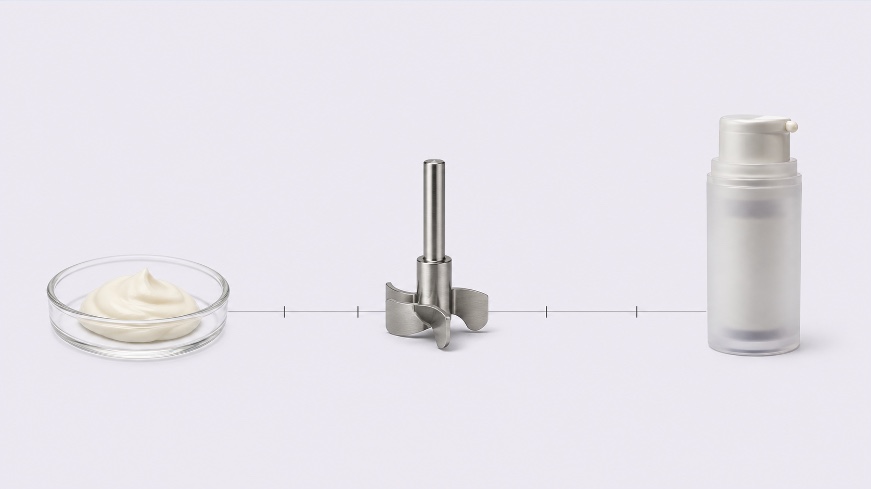
A laboratory sample is an important step in cosmetic product development, but it does not yet confirm that the product can be manufactured smoothly on a commercial scale. A formulation that performs well in small quantities must retain its properties under industrial production conditions.
In practice, several elements need to work together:
- the availability and specifications of raw materials;
- the temperature and order in which ingredients are combined;
- mixing and cooling times;
- consistency of parameters across production batches;
- compatibility between the formulation and the packaging.
A formulation should be developed with the actual production process in mind, rather than being assessed only on how it performs during the initial testing stage. The availability of ingredients and their suitability for the planned production volume are equally important.
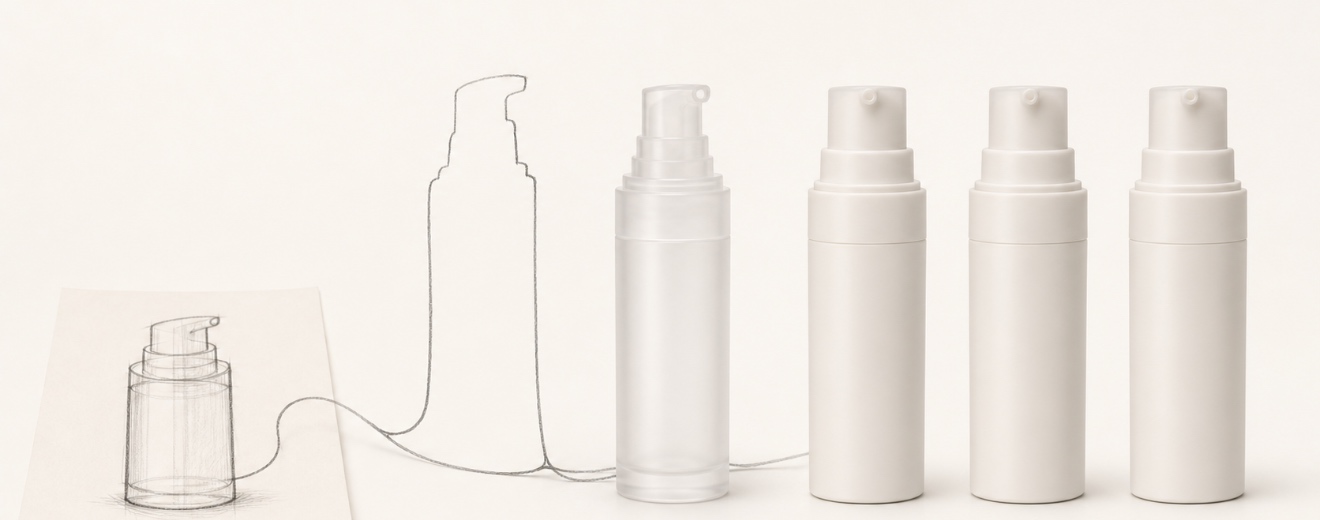
Packaging decisions should be developed at the same time. The product and its packaging should be treated as one integrated project. The type of dispenser, packaging material, labelling method and component availability can affect the schedule just as much as the formulation itself.
For the brand, the key benefit is greater predictability. The earlier the formulation and packaging are considered together, the lower the risk of the project being delayed by an issue that could have been identified before production began.
Production scale should reflect the brand’s stage of development
Production volume is not simply a commercial parameter. It is a decision that affects costs, raw material availability, packaging options and inventory risk. A brand entering the market requires a different approach from a company expanding an existing product line or preparing a product for large-scale distribution.
When planning production volumes, it is worth considering:
- the sales forecast for the initial period;
- product and marketing seasonality;
- minimum order quantities for components;
- the ability to scale production as demand increases;
- the cost of inventory that may remain in storage.
Contract manufacturing allows a brand to benefit from a specialised production process without having to build its own technological and manufacturing facilities. The brand continues to define the product direction, positioning, expectations and business strategy. The manufacturing partner then translates these requirements into a controlled and repeatable process.
Matching the production scale to the brand’s stage of development helps prevent too much capital from being tied up in excess inventory. At the same time, it prepares the business for sales growth without the need for rushed or disruptive changes to the production process.
Quality is built before production begins
In the cosmetics industry, quality is not simply the final stage of inspection. It begins when the product requirements are first defined. It covers the selection of raw materials, the way the manufacturing process is managed, documentation, testing and the conditions under which the finished cosmetic is filled into its packaging.
For a brand, quality is part of a business decision, not merely a technical obligation. A well-structured process helps maintain product consistency, reduces unexpected changes and makes the transition from concept to finished product more efficient.
Schedule a call
Book a short 15-minute call to discuss your project, timelines, and the next steps toward production. No obligation.

Joanna Maciejuk
Senior Key Account Manager