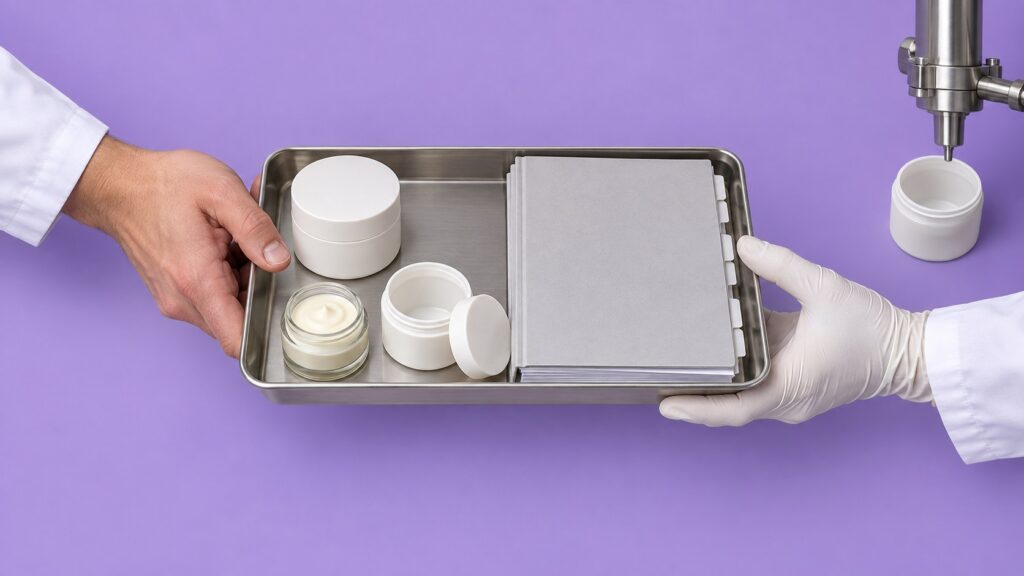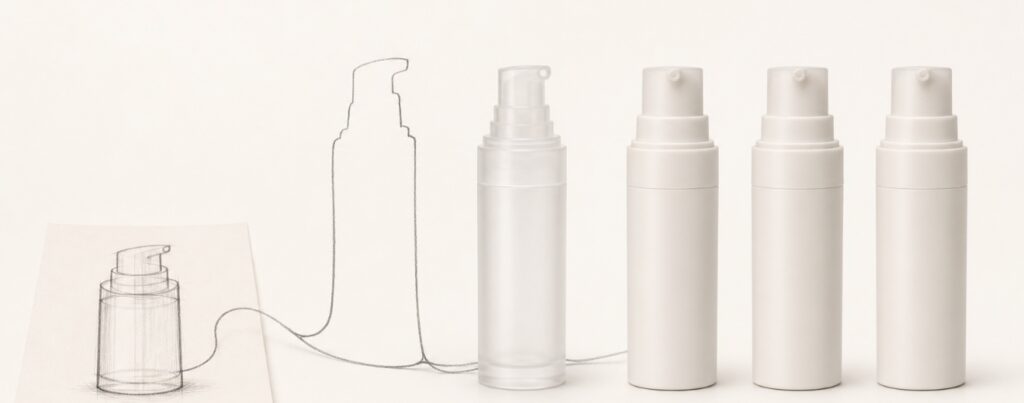



Cosmetics manufacturing does not begin when the mixer is switched on. Before the first batch can be produced, the brand and manufacturer must make a number of decisions concerning the formulation, raw materials, packaging, testing, documentation and labelling. The better organised this stage is, the lower the risk of costly changes, delays and problems when bringing the product to market.
In practice, it is useful to distinguish between three levels of readiness: starting laboratory development, carrying out a pilot production trial and manufacturing a batch intended for sale. Each stage requires the project to be developed to a different level of detail.
From the initial brief to the final formulation
At the beginning of the process, the brand does not need to know every detail of the product. However, it should clearly define its purpose, target users, method of application, intended market and key characteristics. Expectations regarding texture, fragrance, packaging and planned marketing messages are also important.
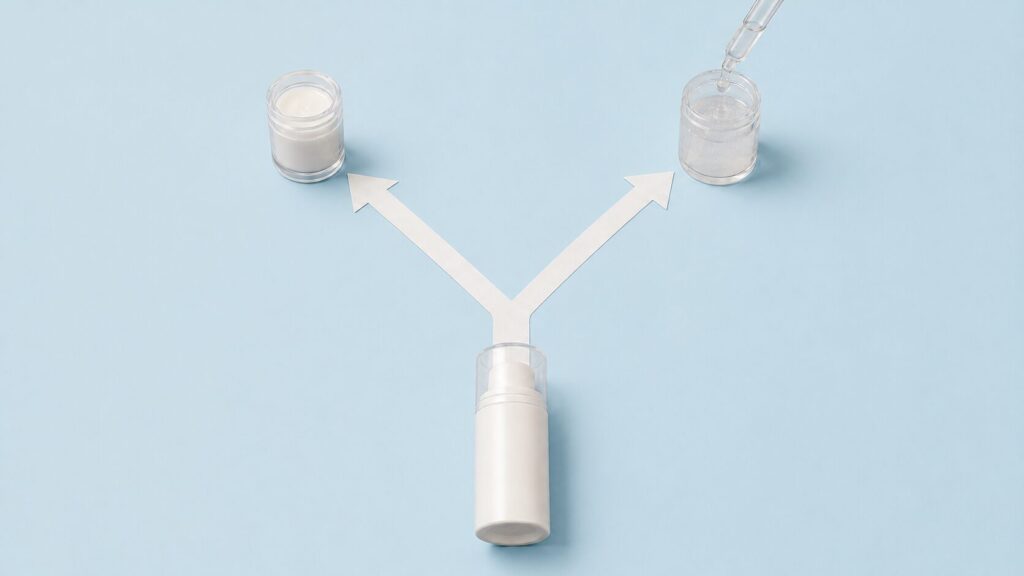
Existing products on the market can provide useful inspiration, but they cannot replace a proper brief or formulation. The laboratory needs to know which features are essential and which can be adjusted during development. At this stage, the parties should also decide whether the product will be developed from scratch, based on a modified existing formulation or created under a white-label model.
Once the formulation has been approved, it should be assigned a specific version number or code. This is important because any change to an ingredient, concentration, supplier or manufacturing process may affect the product’s stability, safety and previous test results. Version control prevents the laboratory, manufacturer and brand from working with different versions of the same product.
Raw materials and product specifications
An approved formulation is only one part of the process. Reliable information about the raw materials is also required. Depending on the type of ingredient and the requirements of the person conducting the safety assessment, the documentation may include:
- INCI names and quality specifications;
- information about allergens and possible contaminants;
- microbiological and toxicological data;
- storage conditions and the shelf life of raw materials;
- documentation relating to fragrance compositions.
Before production begins, the criteria for determining whether a batch meets the agreed requirements must also be established. These are set out in the product specification, which may cover appearance, colour, fragrance, pH, viscosity, microbiological parameters and acceptable tolerance ranges. The criteria must be tailored to the specific formulation and should not simply be copied from another cosmetic product.
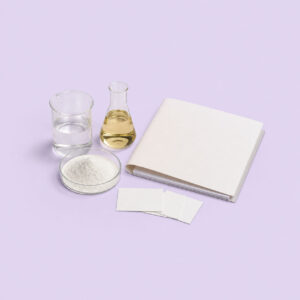
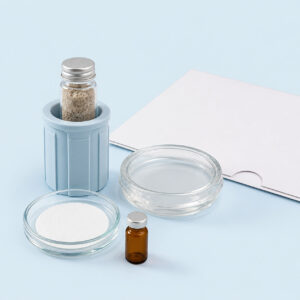

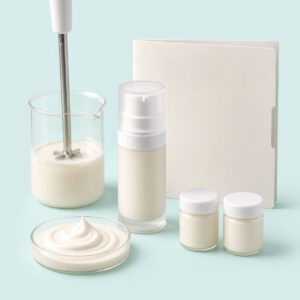
Pilot production trial: moving to a larger scale
A sample prepared in a laboratory does not guarantee that the cosmetic product can be manufactured on a larger scale without any changes. Differences in batch volume, equipment, mixing time, the order in which raw materials are added and temperature control can all affect the final result.
For this reason, a pilot production trial is usually carried out before commercial manufacturing begins. Its purpose is to confirm that the process can be reproduced under production conditions and that the resulting product matches the approved reference sample. At this stage, the formulation, raw materials, key quality parameters and evaluation criteria should already be clearly defined.
Not every marketing element needs to be finalised at this point. The product’s commercial name or the final label design may still be under development, provided this does not interfere with product identification or the proper evaluation of the trial.
Testing requirements depend on the type of cosmetic product
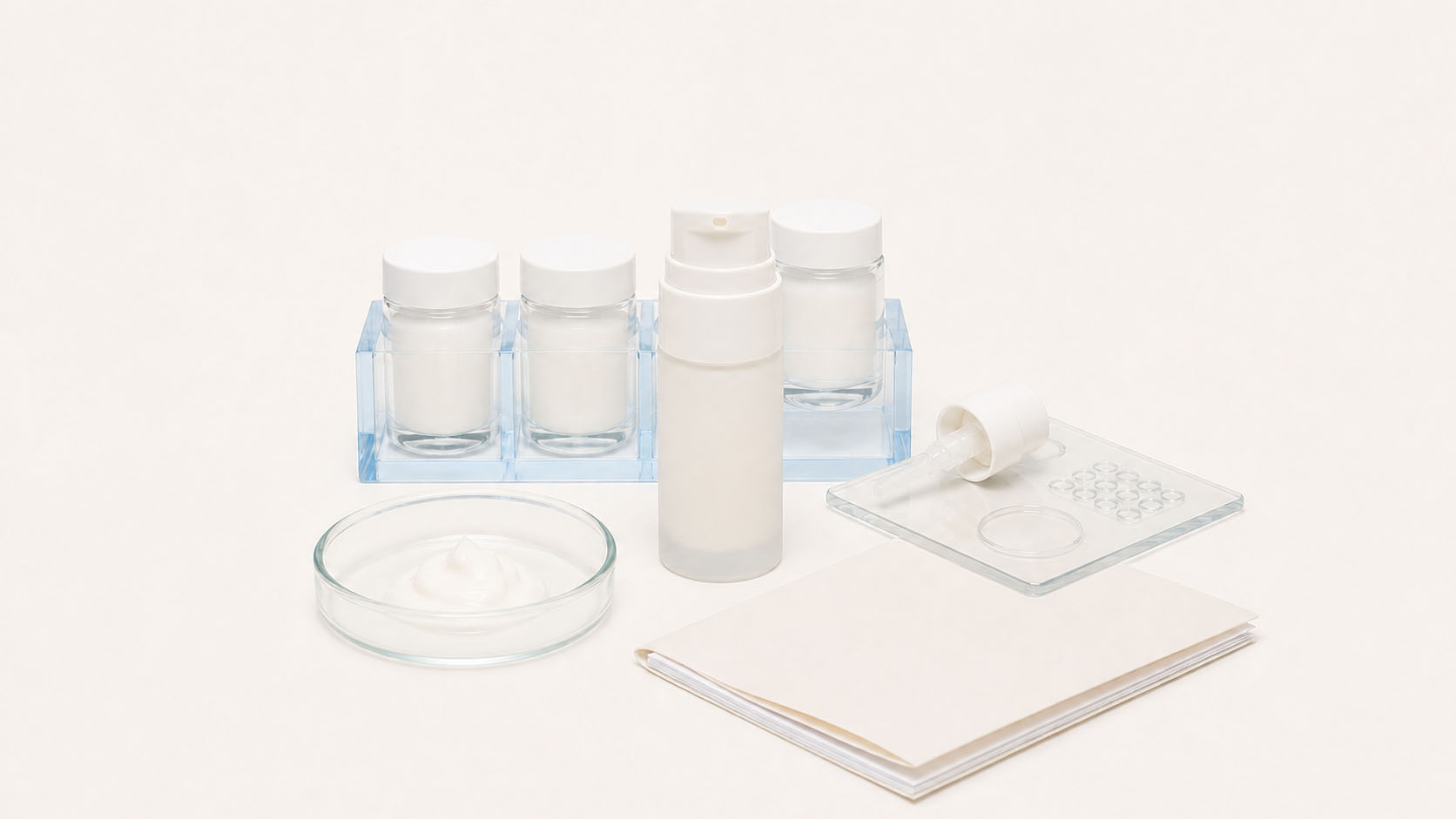
There is no single universal set of tests suitable for every cosmetic product. An emulsion, an anhydrous product, an eye-area cosmetic and a rinse-off product may all require different data. The testing plan should take into account the formulation, intended use, packaging, target users and claimed benefits.
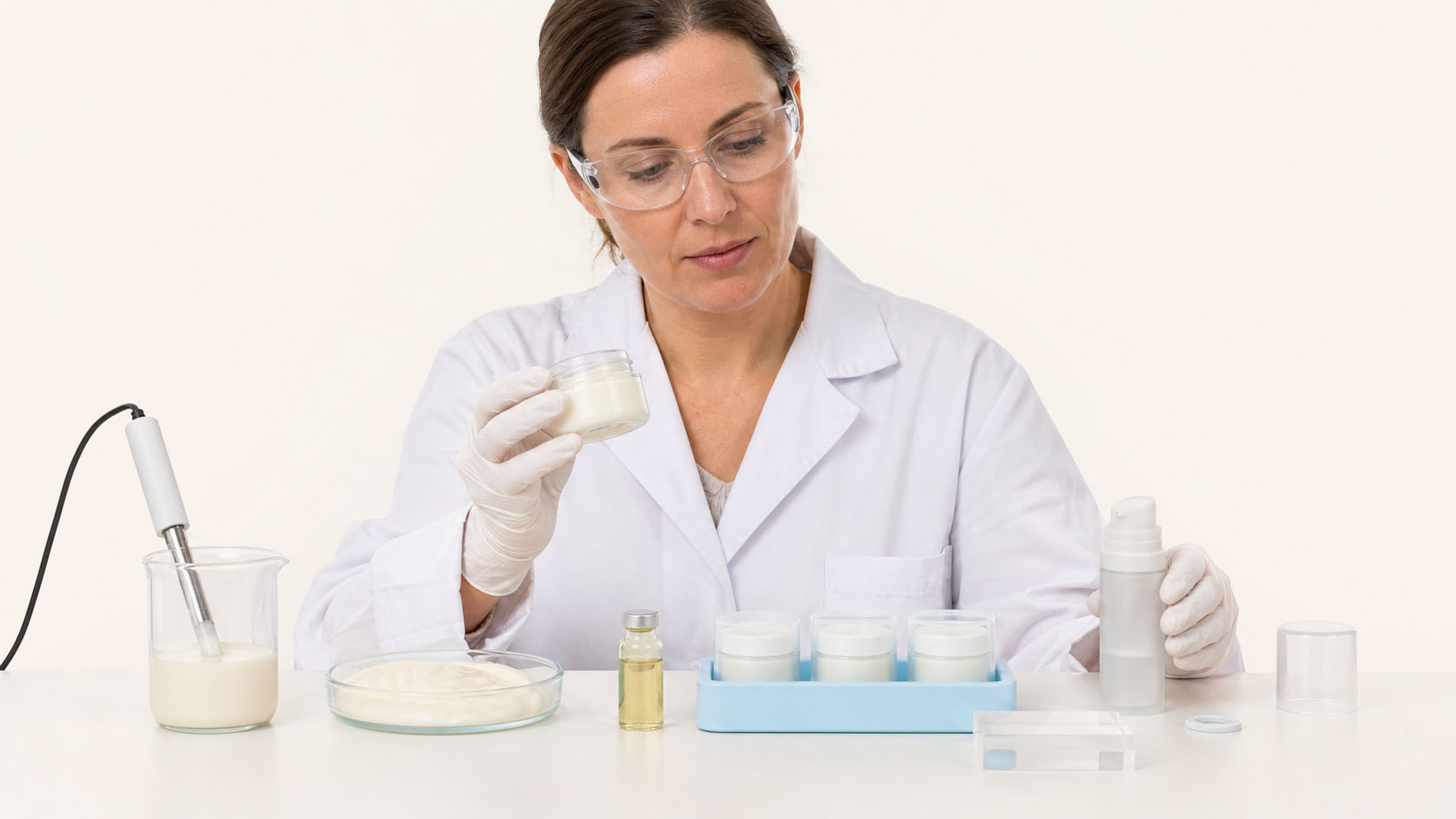
Depending on the project, testing may include stability studies, microbiological quality testing, preservative efficacy testing, packaging compatibility testing and studies confirming specific product properties. What matters is not only the name of the test, but also the formulation version it applies to, the protocol used and the criteria that determine whether the product has passed.
Compatibility between the product and its packaging is particularly important. The formulation may interact with the pump, seal, packaging material or print, while the packaging itself may affect the product’s stability, integrity and dispensing performance. Approval of the graphic design does not therefore mean that the complete product-and-packaging system is ready for production.
Product claims must be supported by evidence
Claims used on packaging and in marketing materials should be planned alongside the testing programme. If a brand intends to communicate a specific benefit, particularly one expressed using numerical values, it should determine in advance how the claim will be substantiated.
Under Commission Regulation (EU) No 655/2013, claims made in relation to cosmetic products should be legally compliant, truthful, supported by evidence, honest and fair. Packaging should not be designed around a promise that cannot be supported by the formulation and documentation. Changing product claims at a late stage often means revising labels and sales materials and, in some cases, modifying the testing plan.
CPSR, PIF and CPNP are three separate elements
Before a cosmetic product can be placed on the European Union market, a Responsible Person must be designated. Among other obligations, the Responsible Person must ensure that a safety assessment is carried out and that a Cosmetic Product Safety Report (CPSR) is prepared.
The CPSR is based on information concerning the product’s composition, physicochemical properties, stability, microbiological quality, packaging, intended use, exposure and the toxicological profile of its ingredients. The report must be prepared by a suitably qualified safety assessor.
The next element is the Product Information File (PIF). This is not a single form or certificate, but a collection of documents that includes the product description, CPSR, information about the manufacturing method and compliance with Good Manufacturing Practice, as well as evidence supporting the claimed effects. The documentation must be kept up to date and retained for ten years after the last batch of the product has been placed on the market.
The Cosmetic Products Notification Portal (CPNP), meanwhile, is the EU’s notification system. A product must be notified through the portal before being placed on the market. However, notification is not a safety certificate and does not mean that the European Commission has approved the product’s efficacy.
Labelling and packaging should be finalised at the end of the process
The final label must be consistent with the approved formulation, documentation and intended market. Depending on the type of product and packaging, it should include:
- the details of the Responsible Person;
- the nominal content of the product;
- the date of minimum durability or the period after opening;
- required precautions for use and the batch number;
- the function of the cosmetic product and the list of ingredients.
Large quantities of packaging should only be ordered after the INCI list, product claims, warnings, language versions and Responsible Person details have been verified. Printing packaging too early can result in costly corrections, particularly if the formulation changes or the test results require the marketing communication to be revised.



A clear division of responsibilities protects the entire project
The process usually involves the brand, laboratory, manufacturer, suppliers, quality control team, safety assessor and Responsible Person. The greatest risk arises when each party assumes that a particular document or task will be handled by someone else.
Before production begins, the parties should therefore establish who approves the formulation, provides raw-material data, plans the testing programme, prepares the CPSR and PIF, verifies the label and completes the CPNP notification. This division of responsibilities should be included in the project arrangements or formal agreement.
Canexpol Group can coordinate the agreed scope of the manufacturing and documentation process. However, the exact division of responsibilities should always reflect the characteristics of the specific cosmetic product, its intended market and the chosen cooperation model.
Proper preparation reduces production risk
The most common problems result from starting production with an unapproved formulation, ordering packaging too early, failing to obtain evidence supporting product claims or leaving responsibilities unclear. Each of these mistakes can generate additional costs and delay the product launch.
Cosmetics manufacturing is therefore not simply a technological stage, but the culmination of decisions made throughout the development process. A clearly defined formulation, appropriate testing, complete documentation and a transparent division of responsibilities make it easier to move from an initial idea to a safe, market-ready cosmetic product.